

Ute Trundle Drawer Power: How to Choose the Right Power Panel
A ute trundle drawer can keep your gear in order, but it won’t tell you whether your power setup can handle the load. A fridge, lights and other trip essentials draw from the system, while space in the ute remains limited. Start by listing what you carry and how long you need power off-grid.
It’s easy to focus on drawer storage and leave power planning until later. Plan for both from the start: list the gear you need to store, note which items need power and consider how you use your rig. A weekend away may call for a different setup from longer off-grid travel. Monitoring and room to adapt may also matter as your needs change.
This guide will help you match your setup to your gear and trips, then compare the REDWorks Scout 25, Scout50, Nomad50 and Pioneer50 by their documented differences. You’ll see how compact pre-wired systems, built-in battery monitoring, scalability and advanced control can help you shortlist a power panel.
Key Takeaways
- Plan your ute trundle drawer around the gear you carry, then consider the separate power system needed to support it.
- Use trip length and electrical loads to guide your panel choice, rather than choosing on size alone.
- Compare the REDWorks panels by their stated features, from compact pre-wired systems to scalable options and advanced monitoring.
- Check how drawer access and equipment placement affect everyday use before settling on your layout.
- Use the checklist to weigh monitoring needs and possible future additions before shortlisting a power panel.
Ute trundle drawer planning starts with storage and power needs
A ute trundle drawer carries and organises gear. It isn’t a power source. A power panel has a separate role: it helps manage and monitor a dual battery setup that supports electrical equipment. Plan the storage and electrical systems together, but assess each on its own terms. Don’t assume the panel will fit inside the drawer. Its position and access to the drawer should work with the vehicle layout.
What belongs in a ute trundle drawer setup?
Start with an inventory of the tools, appliances and recovery gear you actually carry. Sort the items by how often you use them. Keep frequently used tools easy to reach, and position bulky recovery gear or occasional-use equipment where it won’t block everyday access.
Mark which items need power and when you use them. A fridge running throughout a trip has a different duty pattern from lights used briefly at camp. Check drawer dimensions and vehicle fitment separately from panel selection. Storage space determines what you can carry and reach; your electrical plan depends on the loads you need to support.
When does a dual battery power panel matter?
A dual battery system uses a second battery to support powered gear while helping keep vehicle starting power separate. A battery isolator is one component used to manage the connection between batteries. This overview of a dual battery system explains the isolator’s role. A power panel provides a practical point for managing and monitoring that setup, with features that vary by panel.
For a short weekend trip, your electrical needs may be limited. On longer trips away from mains power, how often and how long each load runs becomes more important. Consider what you’ll run, for how long and whether you want visibility of battery status. The number of appliances alone won’t tell you what setup you need. Their usage patterns matter too.
Bring the two plans together before settling on a layout:
- Keep regularly used gear accessible without shifting bulky equipment.
- Identify powered appliances and note when each one runs.
- Allow practical access to the electrical equipment and its controls.
- Check drawer layout and vehicle fitment separately from panel choice.
This gives you a practical starting point: storage arranged for access and a power setup matched to real use. From there, compare monitoring and control features against the time you spend off-grid. Drawer capacity isn’t a guide to electrical capacity.
Ute power panels explained: monitoring, control and room to expand
A dual battery system uses a second battery to support electrical equipment in your ute, alongside the vehicle’s starting battery. A power panel brings parts of that system together and can show information about its status. The right level of setup depends on what you run, how long you’re away from mains power and whether you expect your needs to change.
Start with the actual loads. A fridge used throughout a trip places different demands on a system from lights switched on briefly at camp. Then consider trip duration: a weekend away may call for a simpler arrangement than longer off-grid travel. Your equipment list and how long each item runs are more useful comparison points than a broad label such as “camping setup”.
What does battery monitoring tell you?
Monitoring provides information about the battery system’s status, helping you understand how it’s operating. The information and functions depend on the panel, so use its product documentation to identify the readings and features it actually provides.
That information can help you make informed decisions about power use.
The product descriptions distinguish the REDWorks options. The Scout50 and Scout 25 are described as compact, pre-wired dual battery systems with battery monitoring. The Nomad50 is described as a scalable dual battery system with built-in battery monitoring. The Pioneer50 is described as offering personalised control and advanced monitoring. Match those stated features to the information and control you want.
How should you plan for future electrical loads?
Think through likely changes before choosing a setup, such as adding powered equipment or spending longer away from mains power. Scalability means a system is described as adaptable to additions; it doesn’t mean unlimited capacity. Check product documentation for capacity and supported configurations before planning changes.
- Note each appliance and how long it typically runs.
- Consider equipment you may add and trips that may last longer.
- Check the product documentation for battery chemistry, compatibility and installation details.
Battery type and vehicle wiring matter. Check the panel specifications for suitability with your battery chemistry and vehicle configuration. Installation details matter too. The Australian Government’s national training register outlines relevant automotive electrical competencies, including professional installation standards.
For a ute trundle drawer setup, match the power plan to the equipment you carry and the trips you take. Compare the documented REDWorks panel features in the Electrical Accessories collection against your loads, monitoring needs and plans to expand.
Compare REDWorks Pioneer50, Nomad50 and Scout power panels
Compare these panels by their stated purpose, monitoring and system positioning, not by assumptions based on their names. Their descriptions point to different priorities: compactness, scalability, or more advanced control and monitoring. They don’t specify battery capacity, included batteries, vehicle compatibility or performance. Check the relevant product listing for the details that apply to your setup.
| Panel | Stated positioning | Supplied monitoring description | Best matched to |
|---|---|---|---|
| REDWorks Pioneer50 | Personalised control and advanced monitoring | Advanced monitoring | Shoppers who value greater oversight and personalised control |
| REDWorks Nomad50 | Scalable dual battery system | Built-in battery monitoring | Shoppers looking for the stated scalable option |
| REDWorks Scout50 | Compact, pre-wired dual battery system | Battery monitoring | Shoppers whose priority is a compact system, including weekend use |
| REDWorks Scout 25 | Compact, pre-wired dual battery system | Battery monitoring | Shoppers whose priority is a compact system, including weekend use |
When does the REDWorks Pioneer50 suit a more controlled setup?
The Pioneer50 is described as offering personalised control and advanced monitoring. Consider it if you want more oversight than the product descriptions specify for the compact Scout panels. The description doesn’t detail particular controls, readings or outputs, so compare the product listing with the way you plan to manage power.
How do the Nomad50, Scout50 and Scout 25 differ?
The Nomad50 stands apart through its stated scalability and built-in battery monitoring. The Scout50 and Scout 25 share a description as compact, pre-wired dual battery systems with battery monitoring. Their descriptions don’t explain how the two Scout models differ, so don’t infer a capacity or performance difference from the model names.
For a ute trundle drawer setup, shortlist panels by the job you need the electrical system to do. Prioritise compact positioning for a simpler weekend setup, stated scalability if you plan to adapt the system, or personalised control and advanced monitoring if oversight matters most. Then check the product documentation for specifications, battery compatibility and fitment.
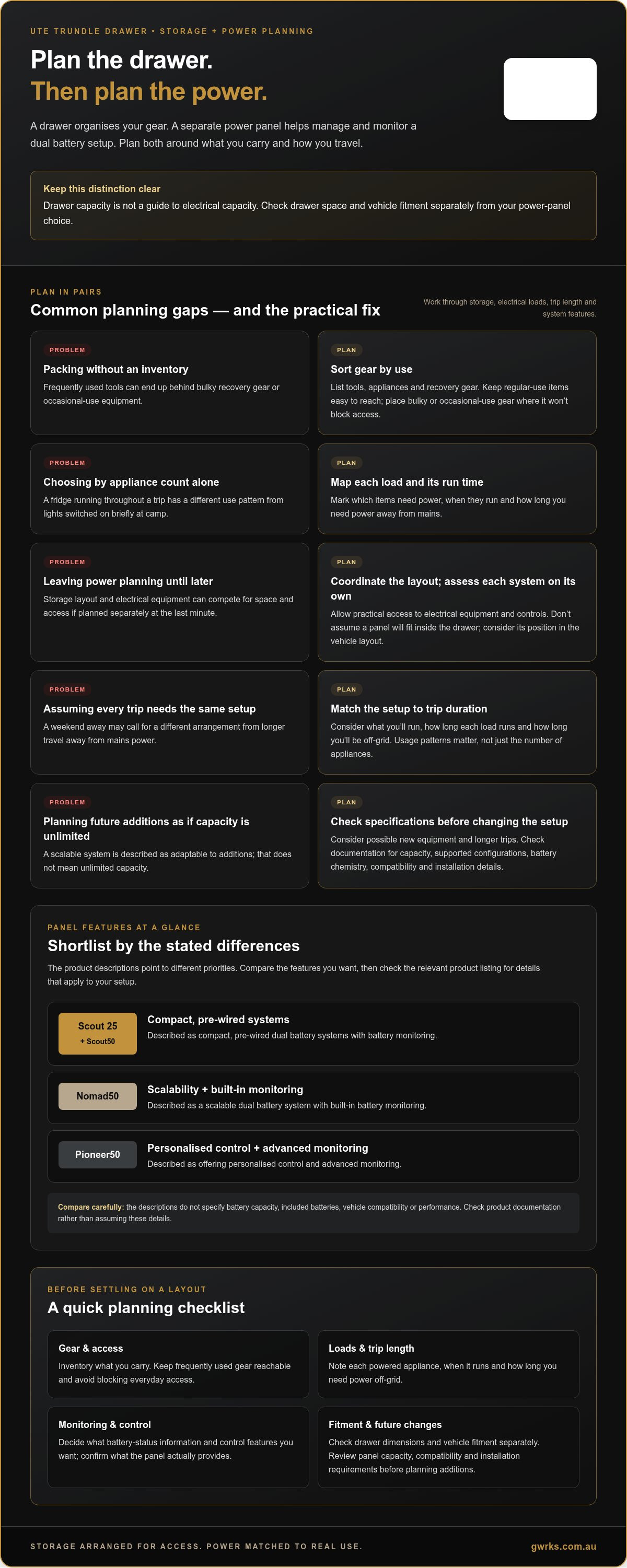
Choose a ute drawer and power setup with this practical checklist
Use the same information to plan both sides of your setup: what needs storing and what needs powering. Work through this checklist before settling on a drawer layout or power panel.
- Inventory your gear. List the tools, appliances and recovery equipment you actually carry. Separate everyday items from bulky gear used only occasionally.
- Check frequency and access. Note what you reach for most often. Place it where you can get to it without unloading heavier or less-used equipment.
- Record power demand. List each powered item and when you use it. Check the item’s electrical requirements in its documentation. Don’t select a panel based only on the number of appliances.
- Decide how much monitoring you want. Consider whether basic battery monitoring meets your needs or whether the documented control and monitoring features of another panel matter to you.
- Plan for changes. Think about longer trips or equipment you may add. Treat scalability as room to adapt, not unlimited capacity, and check the panel’s stated configuration in its product documentation.
Which setup suits weekend trips or longer off-grid stays?
The Scout panels are described as compact, pre-wired options for weekend use. For longer stays away from mains power, assess what you’ll run, how often it runs and how much monitoring you want. The Nomad50 is described as scalable with built-in battery monitoring, while the Pioneer50 is described as offering personalised control and advanced monitoring. Match those features to your plans, then check the specifications rather than assuming a particular trip outcome.
What mistakes should you avoid before choosing?
Don’t infer capacity from a model name. Check the electrical requirements of each appliance you plan to use. Drawer dimensions alone don’t confirm that a power panel will fit or suit your vehicle and battery setup, so use the product documentation to verify compatibility. Keep drawer access and equipment placement in view too. A layout that stores everything but blocks the gear you use daily isn’t practical.
Tray dimensions are another part of the storage plan. Use this guide to aluminium ute tray selection to consider the tray alongside your drawer requirements, then assess electrical components separately. A ute trundle drawer organises your gear; it doesn’t determine panel fitment or electrical suitability.
Once you’ve worked through the checklist, browse the REDWorks power panels and compare their stated monitoring, control and scalability features with your setup.
Shop the REDWorks power panel that fits your ute setup
Use your gear list and trip plans to narrow the choice. The REDWorks panel descriptions distinguish the options by control, monitoring, compactness and scalability. They don’t establish physical fitment or electrical compatibility, so use them to create a shortlist, then confirm the specifications for your vehicle and battery setup.
Which REDWorks power panel should you shortlist?
- Pioneer50: Shortlist it if personalised control and advanced monitoring match the level of oversight you want.
- Nomad50: Consider it if the described scalable dual battery system and built-in battery monitoring suit your plans for additions.
- Scout50: Compare it if you want a compact, pre-wired dual battery system with battery monitoring.
- Scout 25: Compare it alongside the Scout50 for the same stated compact, pre-wired positioning and battery monitoring. Don’t infer a difference in capacity or performance from the model names.
There’s no need to choose the most feature-rich option by default. If compactness is your priority, start with the Scout panels. If you want the stated scalable option, shortlist the Nomad50. If personalised control and advanced monitoring are central to your needs, consider the Pioneer50. Then compare the product details with the electrical loads and trip duration you’ve planned for.
Browse REDWorks electrical accessories
What to check before adding a panel to your fitout
Read the relevant product listing for full specifications and electrical compatibility. Confirm that the panel suits the battery and equipment in your setup. A model name or general description isn’t proof of fit. Understand the installation requirements before finalising the electrical plan.
Plan the panel’s placement separately from drawer fitment. A ute trundle drawer organises stored gear; its dimensions don’t confirm that a power panel will fit there or work with the vehicle’s electrical system. Allow practical access to equipment and controls, and keep the power system’s placement distinct from the drawer’s storage layout.
Shortlist by documented features, then verify the details that determine suitability. This keeps the decision grounded in your fitout rather than assumptions about a model name or broad product category.
Build a power setup around the way you travel
A well-planned ute trundle drawer keeps gear organised; a suitable power panel supports the electrical equipment you rely on. Start with what you carry, how long you spend off-grid and how much monitoring or control you want. Then compare the product specifications with your vehicle, battery and electrical loads.
The REDWorks range includes four options with distinct stated positions. Scout50 and Scout 25 are described as compact, pre-wired systems with battery monitoring. Nomad50 is described as scalable with built-in battery monitoring, while Pioneer50 offers personalised control and advanced monitoring. These descriptions provide a practical shortlist, but you’ll still need to check the details of your setup.
Ready to compare the options? Browse the REDWorks electrical accessories and match the documented features to your plans. Choose based on your needs and the trips ahead.
Frequently Asked Questions
What is a ute trundle drawer used for?
A ute trundle drawer stores and organises equipment in your vehicle. It can keep frequently used tools accessible while separating them from bulky or occasional-use gear. A drawer provides storage, not electrical power. If you carry appliances such as a fridge or lights, plan the power system separately and consider how its equipment and controls will work alongside the drawer layout.
Can you fit a power panel inside a ute trundle drawer?
Don’t assume a power panel is designed to fit inside a ute trundle drawer. Drawer dimensions alone don’t confirm panel fitment, electrical compatibility or suitable placement. Check the panel’s product documentation and plan its position separately from your storage layout. Keep access to stored gear and electrical equipment practical, and verify that the panel suits the vehicle and battery setup.
How do I choose a dual battery power panel for my ute?
Choose by matching the panel’s documented features to your electrical loads, trip duration and monitoring needs. List the appliances you’ll run and how often you’ll use them, then consider whether you want a compact pre-wired system, built-in battery monitoring, scalability or more advanced control. Check product specifications for battery and vehicle compatibility rather than inferring capacity or performance from a model name.
What is the difference between the REDWorks Scout50 and Scout 25 Power Panels?
The REDWorks Scout50 and Scout 25 are both described as compact, pre-wired dual battery systems with battery monitoring. Their descriptions don’t establish a difference in capacity, performance or compatibility. Don’t assume the model names define those details. Compare the product listings for full specifications and choose after checking which documented features suit your electrical requirements.
Is the REDWorks Nomad50 Power Panel scalable?
Yes. The REDWorks Nomad50 is described as a scalable dual battery system with built-in battery monitoring. Scalability means the system is positioned to adapt, but it doesn’t mean unlimited capacity or confirm that a particular addition is compatible. Before planning extra equipment, review the product documentation and check that the proposed configuration suits your battery, vehicle and electrical loads.
What does battery monitoring do in a dual battery system?
Battery monitoring provides information about the status of a dual battery system. That information can help you make informed decisions about power use, especially when running equipment away from mains power. The available readings and functions vary by panel, so don’t assume specific alerts, measurements or app features. Check the product listing to see what monitoring features are documented for the panel you’re considering.
Do I need a power panel for a ute drawer setup?
No. A ute drawer stores and organises gear; it doesn’t require a power panel by itself. A panel may be relevant if you carry electrical equipment and want a dual battery setup to support it. Base the decision on the appliances you use, how long you’re away from mains power and whether monitoring or control features are useful for your trips.
What should I check before buying a ute power panel?
Check the product listing for full specifications, battery and vehicle compatibility, and installation details. Confirm the electrical requirements of the equipment you plan to run, then match them to the documented panel features. Plan panel placement separately from drawer dimensions and access. Don’t infer capacity, fitment or performance from a product name or assume that a panel will suit every vehicle setup.