

Aluminium Ute Trays: How to Choose a Work-Ready Setup
The lightest tray isn’t automatically the right tray. Aluminium ute trays need to suit your ute, cab configuration and regular loads. Otherwise, even a lighter setup can leave you with the wrong working platform.
Choosing a replacement tray raises practical questions. Will it fit your vehicle? How much of your available payload will the tray and its accessories use? Do its construction and features match the work or touring you actually do? These details matter more than a product listing’s headline claims.
This guide explains how to assess fitment, weight, construction and useful features before making a decision. You’ll learn how to include the tray in your load plan, compare options against your workload and identify details worth examining closely. GWorks designs and manufactures aluminium trays in Australia using high-grade aluminium, with vehicle-specific setups shaped around the ute and its intended use. Choose on fit, function and weight, not appearance alone.
Key Takeaways
- Start with your ute’s make, model, year and cab configuration to narrow down suitable aluminium ute trays.
- Assess construction and fitment against your actual working conditions, rather than judging durability by material alone.
- Include the tray and fitted equipment in your payload plan before deciding what else to carry.
- Work through vehicle fitment, regular loads and essential features before considering accessories or appearance.
- Prepare your vehicle and workload details to shape a setup around how you use your ute for work or touring.
Start with the ute: match aluminium ute trays to vehicle and workload
Start with the ute, the work and the load. Appearance comes later. A tray that looks right but doesn’t suit the vehicle or your routine can create problems before the first load is secured.
Before comparing options, write down your vehicle’s make, model, year and cab configuration. Note whether it currently has a tub or tray, and gather the relevant vehicle details. This information helps narrow down suitable configurations and gives a vehicle-specific setup a clear starting point.
Fitment isn’t one-size-fits-all. Cab configuration and vehicle dimensions affect how a tray matches the ute, so don’t assume a tray listed for a similar model will fit yours. Use your own vehicle information when comparing aluminium ute trays. For a brief background on the Australian vehicle class, see What is a ute?
Vehicle fitment sets the boundaries; workload sets the priorities. The tray has to meet both.
Which vehicle details matter before choosing a tray?
Gather these details before narrowing down a configuration:
- Make, model and year: identify the exact vehicle, not just the brand.
- Cab configuration: note whether it’s a single, extra or dual cab.
- Existing setup: record whether the ute has a tub or tray and what will be replaced.
- Vehicle dimensions: use details specific to your vehicle when assessing tray size and fit.
Cab layout and dimensions influence the space available and the fit required. Start with accurate vehicle information instead of assuming trays are interchangeable across models or cab styles.
How should work and touring use shape tray choice?
List what the ute carries during an ordinary week. A tradesperson regularly loading tools, materials and equipment may need quick access to frequently used items. A touring setup may prioritise space for camping gear and equipment carried less often. For mixed use, account for both without letting occasional needs dictate the whole layout.
Write down essential functions before comparing finishes or appearance. Consider what you carry, how often you load it and which items need to be reached quickly. This makes the comparison practical: each tray either supports your routine or it doesn’t.
What makes aluminium ute trays durable in daily use?
Durability means more than resisting a knock. A tray needs to suit the loads it carries and the conditions it faces day after day. Material matters, but it doesn’t tell the whole story. Construction, fitment and access all affect whether the setup works for its intended job.
A material label tells you what a tray is made from, not whether its complete construction suits your work. Look beyond the headline and assess the tray as a whole. Product information should help you understand how its joins, support points, finish and layout are arranged. Don’t infer load capacity or strength from a photo. Use the stated specifications and compare them with the loads and use you have in mind.
Which construction details should buyers look at?
Review visible details alongside the supporting product information. Look at how sections meet, where the structure is supported, whether the finish appears consistent and whether the layout gives practical access to your regular gear. Treat these as prompts for assessment, not proof of a particular rating.
A tray works as a complete structure. One strong-looking component can’t tell you how the full design performs once fitted and loaded. GWorks designs and manufactures trays in Australia using high-grade aluminium. For context on vehicle design standards, consult the Australian Government’s information on Australian Design Rules (ADRs).
How do Australian conditions affect a tray’s working demands?
Dust can settle around working surfaces and access points. Moisture exposure varies with weather, storage and the type of work. Vibration is part of regular vehicle use, and the demands of a workday can change between carrying equipment, materials and general cargo. Consider the conditions your ute faces rather than choosing on appearance alone.
Think about where the vehicle is stored, how often it works in dusty or wet conditions, and which tray areas are exposed during loading. These factors can help you compare a setup with your routine. They don’t replace product-specific construction or care information, and they aren’t a basis for assuming a particular service life.
When looking at Australian-made aluminium trays, compare the product’s documented construction and layout with your vehicle and intended use. A sound choice rests on the whole build, not a single material claim.
Will an aluminium ute tray reduce usable payload? Understand the trade-offs
A tray is part of the vehicle’s loaded setup, not weight you can ignore. Payload is the weight your ute can carry within its rated limits after accounting for the vehicle and its fitted equipment. When you replace a factory tub with a tray, the change in usable payload depends on the weight difference between those parts, plus any accessories added.
Tray tare belongs in payload planning because every kilogram of fitted equipment uses part of the vehicle’s available capacity. Use the payload and mass ratings for your exact vehicle, along with reliable weights for the items being removed and added. Don’t rely on a generic ute figure: configurations and factory equipment differ.
How do tray weight and payload fit together?
Tare is the vehicle’s unladen weight as defined for its specification. Payload is the carrying capacity available within the vehicle’s rated limits. Loaded vehicle weight is the vehicle with its occupants, fitted equipment and carried items aboard.
Start with the rated payload for your vehicle. Account for the factory tub if it’s included in the vehicle’s stated tare, then compare its weight with the replacement tray. Include accessories, occupants and cargo in the overall load plan. The calculation depends on the vehicle’s published ratings and what its stated mass includes, so use those details rather than assumed weights.
What should you compare before replacing a factory tub?
Compare the complete setup, not just tray weight or deck space. List the tub being removed, the replacement tray, planned accessories, regular cargo and occupants. Then assess the combined load against the vehicle’s ratings. A lighter replacement may leave more capacity than a heavier option, but the difference depends on the actual weights involved.
Use the specifications for your vehicle and the stated weights of the equipment in your setup. This gives you a sound basis for weighing up a factory tub replacement without relying on generic claims about payload or efficiency.
| Setup item | How to account for it |
|---|---|
| Original tub | Record its weight if known, and establish whether it’s included in the vehicle’s stated tare. |
| Replacement tray | Use the tray’s stated weight and compare it with the tub being removed. |
| Added equipment | Include accessories, occupants and carried gear in the total load plan. |
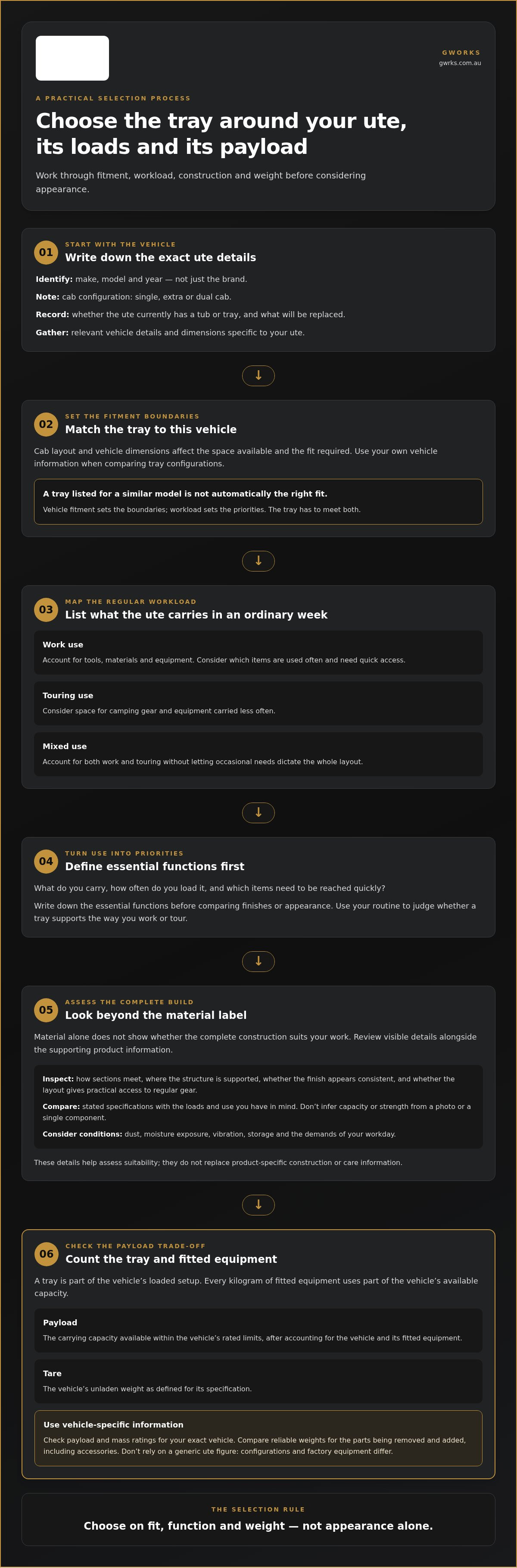
Use this aluminium ute tray checklist before settling on a setup
A clear requirements list keeps the decision grounded. Work through vehicle fitment and payload first, then compare layout, features and appearance. This order separates what the ute needs to do from what would simply be nice to have.
What details belong in a tray requirements list?
Build a short brief before comparing configurations. Record the details that shape fit, load and daily access:
- Identify the ute: note make, model, year, cab configuration and whether it has a factory tub or an existing tray.
- Describe its use: state whether it’s for regular trade work, touring or a mix of both.
- List typical loads: include tools, equipment, materials, touring gear and the items carried most often.
- Define access and storage: note what needs to be reached quickly, what needs secure storage and how much deck space your work requires.
- Plan the full load: include occupants and intended accessories when considering payload, before adding optional equipment.
Separate essential functions from preferences. A storage or access need tied to daily work comes first; a cosmetic choice can wait until the core setup is right.
How can you compare tray options without getting distracted?
Use the same brief for every option. Compare vehicle fitment, documented construction, usable layout and the weight of the complete setup. Check each against your regular loads and vehicle-specific ratings. Don’t let extra deck space or an appealing finish distract you from a mismatch in fit or payload.
Mark each requirement as essential, useful or optional. A cab-specific layout guide can help with configuration choices, while a custom-tray guide can cover tailored layouts. Keep this checklist focused on selection; detailed layout decisions belong in those dedicated guides.
Before preparing a quote request, bring together your vehicle details, typical loads, payload considerations and priority features. A clear brief gives the setup a practical starting point. Explore GWorks aluminium ute trays and compare options against the requirements that matter to your ute.
Choose a GWorks aluminium ute tray built around your requirements
A sound tray decision comes down to four checks: vehicle fitment, workload, construction and payload. Keep them in that order. A setup should suit the ute, do its intended job and sit within the vehicle’s load limits. Consider appearance once the working requirements are clear.
What does GWorks bring to an aluminium ute tray setup?
GWorks designs and manufactures aluminium ute trays in Australia for work and recreational use. Its products are engineered using high-grade aluminium. This gives you a starting point for comparing a tray’s documented construction and features with your intended use, rather than relying on material claims alone.
Fitment and workload still lead the decision. Ask practical questions: does the setup suit your vehicle, your regular loads and the way you need to access equipment? Build your choice around those demands.
What should you have ready when requesting a vehicle-specific quote?
Prepare the details that shape the setup. Include your vehicle’s make, model, year and cab configuration, then summarise its intended use, regular loads and planned accessories. Note any important storage or access needs. A clear brief connects the quote to the ute and the work it needs to do.
Include your vehicle’s payload information as part of that brief. List the equipment you expect to carry so the tray and accessories can be considered as part of the complete setup, not in isolation.
GWorks customers can browse tray options and request quotes for vehicle-specific setups. Use your requirements to compare the available information with your vehicle and workload. Explore GWorks aluminium trays and prepare your vehicle details for a quote.
Build your tray choice around the work ahead
The right aluminium ute trays setup starts with your vehicle and the job it needs to do. Match the tray to your ute’s fitment, assess construction as a complete build, and include tray weight and accessories in your payload plan. These checks matter more than appearance alone.
GWorks designs and manufactures trays in Australia using high-grade aluminium for work and recreational use. A vehicle-specific quote helps shape the setup around your ute, regular loads and intended use. Have your vehicle details and key requirements ready, then compare options against what the vehicle must carry.
Start with the essentials and choose a setup that earns its place on the ute. Explore GWorks aluminium ute trays and prepare your vehicle requirements for a quote. A sound decision begins with clear details and equipment suited to the work ahead.
Frequently Asked Questions
Can aluminium ute trays handle regular trade use?
Yes. Aluminium ute trays can suit regular trade use when their construction, fitment and stated capacity align with the loads and working conditions. GWorks designs and manufactures trays in Australia using high-grade aluminium for work and recreational use. Assess product information as a whole, including construction details and vehicle fitment, then compare the setup with the tools and materials you carry routinely.
Are aluminium ute trays lighter than steel trays?
Generally, an aluminium tray weighs less than a comparable steel tray, but the exact difference depends on its design, size and fitted equipment. A lighter tray may leave more payload available than a heavier alternative, but it doesn’t increase the ute’s rated limits. Compare the specified tare weights and account for accessories, occupants and cargo before working out how much usable capacity your vehicle will have.
How do I choose aluminium ute trays that fit my ute?
Start with your ute’s exact make, model, year and cab configuration. Note whether it has a factory tub or an existing tray, then use vehicle-specific information to compare suitable fitments. Don’t assume a tray will fit because it suits a similar model or cab style. GWorks provides vehicle-specific quotes, so prepare these details along with a clear summary of how you’ll use the tray.
Will replacing my factory tub with an aluminium tray change my payload?
It can change the payload available for your gear because the tub and replacement tray have different weights. Compare the complete setup using your vehicle’s ratings and accurate weights for the tub, tray and planned accessories. Include occupants and cargo in your load plan too. The result depends on your specific vehicle and equipment, so avoid generic payload figures or assumed component weights.
What should I check before ordering an aluminium ute tray?
Check vehicle fitment, cab configuration, construction information, tray weight and the layout you need for daily access and storage. List your regular tools, equipment or touring gear, then account for planned accessories and occupants when assessing payload. Use the same requirements for each option you compare. Having these details ready also gives a vehicle-specific quote a useful starting point.
Can I fit accessories to an aluminium ute tray?
Yes, accessories can be part of a tray setup when they suit its configuration and intended use. GWorks sells trays and accessories, so consider how each planned addition works with the layout and what you need to carry. Include accessory weight in your payload plan. Choose around essential functions first, such as storage or access, then consider optional additions.
Are aluminium ute trays suitable for touring as well as work?
Yes. GWorks trays are engineered for work and recreational use, which can include touring. The right setup depends on your vehicle, the gear you carry and how you need to access it. For a mixed-use ute, separate everyday work needs from occasional touring requirements, then account for both in the layout and payload plan. Prioritise the functions you’ll rely on most often.