

Dual cab tray guide for Australian utes
A tray that fits the chassis can still fail the job. A dual cab tray affects more than the look of your ute: cab clearance determines fitment, the layout shapes usable deck space, and the tray’s own weight leaves less payload for tools, passengers and gear. Get one part wrong and the setup can be awkward before the first load goes on.
It’s reasonable to focus first on how much you can carry and where everything will sit. But those choices work together. Added storage may solve one problem while adding weight or making other items harder to reach. Start with your ute’s measurements, payload figures and regular loads, then plan the layout around them.
This guide explains how to assess cab clearance, compare practical tray layouts and account for the weight of the tray and accessories when planning your load. You’ll also see which vehicle details to gather before specifying a tray, so you can plan for regular work or recreation rather than guess. GWorks designs and manufactures high-grade aluminium trays in Australia, with fitment and the job ahead in mind.
Key Takeaways
- A dual cab tray needs to suit the exact ute configuration, not just the cab style.
- Check deck dimensions, cab clearance and rear overhang before settling on a layout.
- Plan payload across the whole vehicle, including the tray, accessories, occupants, fuel and cargo.
- Start with the jobs you do most often, then shape storage and access around those loads.
- GWorks designs and manufactures high-grade aluminium trays in Australia for work and recreational setups.
What makes a dual cab tray different from a factory tub?
A dual cab tray is an open rear deck fitted to the chassis behind a ute’s four-door cab. It replaces the factory tub, changing the load surface and the options for access and storage. The cab, chassis and tray need to work as one setup, not as separate parts.
A factory tub has shaped sides, a tailgate and wheel arches that take up some of the load area. A tray can provide a flatter deck, often with access from the sides and rear, and a platform for accessories. That can suit bulky gear or frequent loading. A tub may suit owners who value its familiar enclosed shape. Neither is automatically the better choice: the right fit depends on your vehicle and regular jobs. For background on the Australian vehicle type, see What makes a ute distinct.
How a dual cab tray changes the ute layout
The cab carries occupants, the chassis supports the cab and rear deck, and the tray sits behind the cab. Its position and length depend on the vehicle’s configuration. A dual cab’s passenger cabin takes up more of the vehicle’s length than a single cab’s, while an extra cab has a different cabin layout. These differences affect the space available for a tray and the clearance it needs.
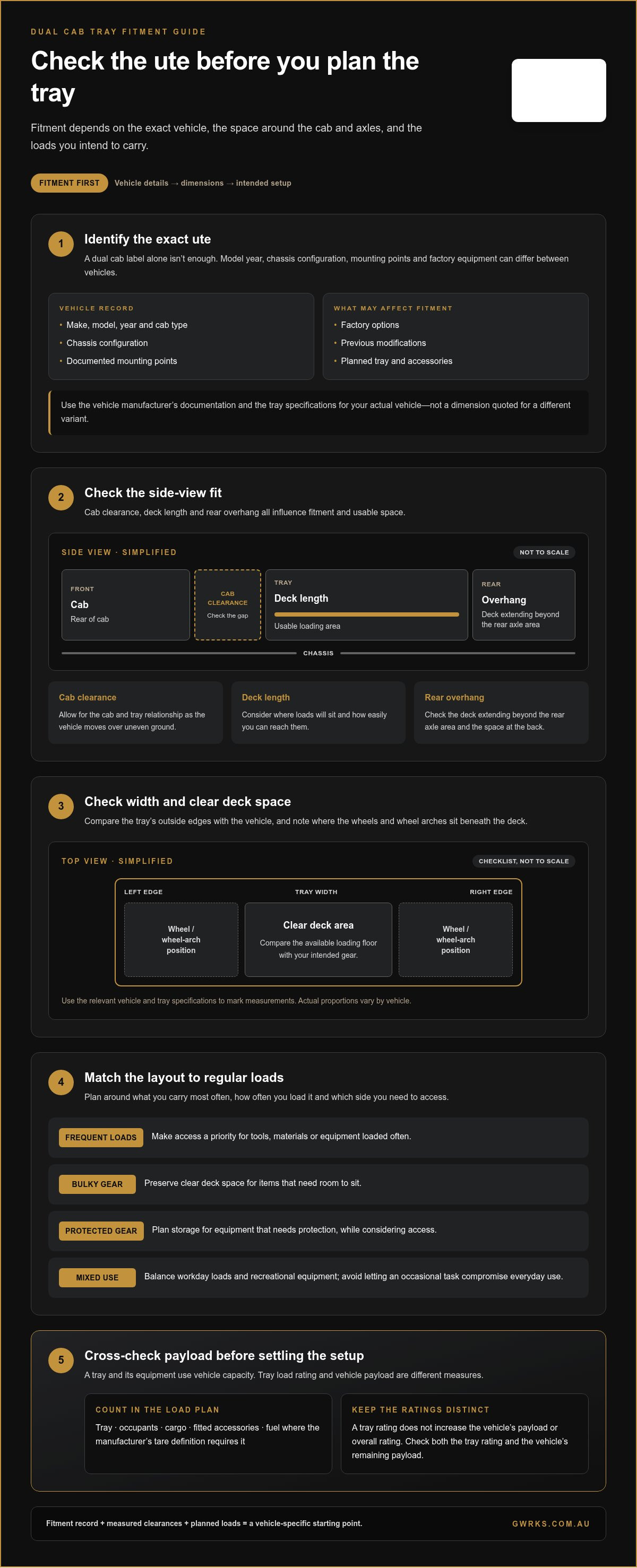
Side view, simplified:
[Front] Cab → Chassis → Tray deck → Rear overhang [Rear]
The rear overhang is the deck extending beyond the rear axle area. This layout is illustrative only; actual proportions vary by vehicle.
Who uses a dual cab tray and for what jobs?
Work use may call for quick access to tools, materials or equipment loaded often. Touring can put more emphasis on carrying bulky gear and organising storage. A mixed-use ute may need to switch between workday loads and recreational equipment without making either task difficult.
Start by listing what you carry most, how often you load it and which side you need to reach it from. Frequent loading makes access a priority. Bulky items need clear deck space, while gear that needs protection may call for planned storage. Avoid designing around an occasional task at the expense of everyday use.
These choices connect. Tray fitment affects clearance and deck layout, while the tray and its equipment add to the vehicle’s load. Consider payload and daily access together before settling on a configuration. That gives you a sound basis for comparing tray layouts in the sections ahead.
Which dual cab tray dimensions affect fitment and cab clearance?
A dual cab tray must match the exact ute, not just its cab style. Vehicles described as dual cabs can differ in model year, chassis configuration, mounting points and factory equipment. Those differences affect where the tray sits and how much usable deck space remains. Use the vehicle manufacturer’s documentation and tray specifications for your actual vehicle. Don’t rely on a dimension quoted for a different variant.
Cab clearance, deck length and rear overhang
Check the gap between the rear of the cab and the front of the deck. Adequate clearance helps prevent the tray crowding the cab as the vehicle moves over uneven ground. Too much gap can waste useful deck space. Deck length determines where loads can sit and how easily you can reach them. Rear overhang matters too: it affects the position of loads behind the rear axle and the space available at the back of the vehicle.
Check the tray width against the vehicle as well. Note where the wheels and wheel arches sit beneath the deck, as these can affect the usable floor area. A top view can help you compare the tray’s outside edges with the clear space available for loading.
Side view, annotate: cab rear → clearance → tray front → deck length → rear axle → rear overhang → tray rear
Top view, annotate: tray width → left and right edges → wheel and wheel-arch positions → clear deck area
Mark measurements from the relevant vehicle and tray specifications. This diagram is a checklist, not a scale drawing.
Vehicle details to gather before planning fitment
Build a fitment record before comparing layouts. Include:
- Make, model, year and cab type.
- Chassis configuration and documented mounting points.
- Factory options or previous modifications that could affect mounting, clearance or available space.
- The planned tray and accessories, so their position can be considered alongside the intended loads.
Use manufacturer documentation for vehicle dimensions and payload terminology. For load positioning and restraint, the National Transport Commission’s light vehicle load restraint guide provides practical guidance. The tray’s footprint is only part of the fitment decision; how gear sits on it matters too.
Bring those vehicle details and your intended setup together for a vehicle-specific aluminium tray quote from GWorks. Accurate measurements, clearance requirements and a realistic load plan give the quote a useful starting point.
How does a dual cab tray affect payload and load balance?
Payload is the weight your ute can carry under the vehicle manufacturer’s stated limits. It’s not the same as a tray’s load rating. A tray rating relates to the tray; it doesn’t raise the vehicle’s payload or overall rating. Usable capacity depends on the exact vehicle and how its manufacturer defines tare and payload.
Count the tray, occupants, cargo and fitted accessories. Include fuel where the manufacturer’s tare definition requires it. A canopy, toolbox or other equipment uses capacity that would otherwise be available for people and cargo. The tray’s own rating may also be lower than the vehicle’s remaining payload, so both figures matter.
What counts towards a dual cab ute payload?
Start with the payload figure in the documentation for your exact vehicle. Check how the manufacturer defines tare, including whether fuel or standard equipment is included. Don’t assume figures from another model year or configuration apply.
- Tray and any fitted canopy or accessories
- Driver, passengers and carried equipment
- Cargo, tools and touring gear
- Fuel or other items required by the manufacturer’s tare definition
Use the table as a working check. Copy the vehicle payload figure and weight definitions from the manufacturer’s documentation, then enter the actual weights for your setup. Don’t treat a blank weight as zero.
| Load item | Weight (kg) |
|---|---|
| Documented vehicle payload | _____ |
| Tray and fitted accessories | _____ |
| Occupants and carried equipment | _____ |
| Fuel, if required by the tare definition | _____ |
| Cargo and other carried items | _____ |
| Estimated payload remaining after these loads | _____ |
Use consistent figures and definitions. Subtract the counted loads from the documented payload to estimate what remains. This is a planning check, not a substitute for the vehicle maker’s limits.
Why load position matters as well as total weight
Two loads with the same total weight can affect a ute differently if one sits high, far back or unevenly across the deck. Position loads as the manufacturer directs, distribute them sensibly and secure them against movement. Check the finished setup against the vehicle’s guidance, not just the tray rating. A sound load plan accounts for weight and placement together.
How to plan a dual cab tray around work, touring and everyday use
Plan around the jobs you do most, not the gear you might carry once a year. A useful brief connects regular loads to deck space, access and payload before you settle on a layout. Separate everyday needs from occasional touring gear so a one-off requirement doesn’t dictate the whole setup.
Match the deck and access to regular tasks
Write down what you carry in a typical week. Note each item’s size, approximate weight, how often it goes on the ute and how you load or unload it. Long materials, tool cases and bulky recreation gear place different demands on the deck.
Then consider access. An open deck gives direct access to loads, while equipment that needs protection may call for enclosed or lockable storage. Keep frequently used gear within practical reach. Allow for safe restraint and avoid blocking access to items you need during the day.
Sort requirements into two groups:
- Regular use: daily tools, work materials, passengers and equipment you load often.
- Occasional use: touring or recreational gear carried on specific trips.
Use regular needs to set the layout. Add occasional requirements only where they fit the vehicle’s dimensions and payload plan.
Build a vehicle-specific tray brief
Bring the details together before requesting a tailored quote. Use this worksheet to make the job clear:
- Vehicle: make, model, year, cab type and chassis configuration.
- Existing setup: factory options, modifications and equipment already fitted.
- Regular loads: items carried, their approximate weights and how often they’re loaded.
- Access needs: where you need to reach gear and whether any items need enclosed storage.
- Payload information: the figure and weight definitions from the vehicle manufacturer’s documentation.
- Occasional use: touring or recreational equipment that must fit alongside everyday loads.
Use the brief to check the tray’s fit against the exact vehicle details, then assess the complete load, including occupants, fitted equipment and cargo. GWorks designs and manufactures high-grade aluminium trays in Australia for work and recreational use. Explore GWorks aluminium trays as you plan a setup around your vehicle and regular tasks.
Choosing a dual cab tray that works as a complete GWorks setup
A sound tray decision comes down to three checks: exact vehicle fit, whole-vehicle payload and daily access. Consider them together. A tray may suit the chassis but leave too little capacity for the load, or carry the gear while making everyday access awkward. Check all three before settling on a configuration.
A final dual cab tray fitment checklist
- Confirm the vehicle: Record the make, model, year, cab type and chassis configuration from the vehicle documentation. Don’t assume another variant has the same mounting points or dimensions.
- Check fitment: Compare tray dimensions, cab clearance, wheel position and rear overhang with information for that specific vehicle. Use manufacturer specifications rather than a general measurement for dual cabs.
- Plan the whole load: Account for the tray, occupants, accessories and cargo against the payload figure and definitions in the vehicle documentation. A tray’s own load rating doesn’t increase the vehicle’s payload.
Then check access. Think about what you load most often, where it sits and whether you can reach it without shifting other gear. A layout proves its value in the work or travel it needs to support, not just on paper.
From tray plan to a GWorks quote
Prepare a clear brief for your vehicle-specific quote. Include your vehicle details, typical loads, intended use and any existing modifications or fitted equipment. Describe practical needs, such as whether long items need clear deck space, which tools you reach throughout the day, or whether some gear needs enclosed storage.
Use the payload information from your vehicle’s manufacturer documentation and give realistic details about occupants and regular cargo. This keeps the discussion grounded in the complete setup, rather than treating the tray as an isolated component. Separate everyday requirements from occasional touring gear so the main layout serves the jobs you do most.
GWorks designs and manufactures high-grade aluminium trays in Australia for work and recreational use. With your fitment details, load plan and access priorities in hand, you can explore a tray setup suited to your ute and its job. Explore GWorks trays and request a vehicle-specific quote.
Plan your tray around the whole job
A capable dual cab tray starts with the right fit for your exact vehicle. Check cab clearance and deck dimensions, then plan payload across the tray, occupants, accessories and cargo. Make daily access part of the decision too. The layout should suit the gear you carry most, not just look right on paper.
Bring your vehicle details, regular loads and storage priorities together before settling on a setup. GWorks designs and manufactures high-grade aluminium products in Australia for practical work and recreational use. A vehicle-specific quote can be tailored to your ute and requirements, giving you a clear next step from planning to fitment.
Explore GWorks aluminium trays and request a vehicle-specific quote. With the right details in hand, you can plan a setup that fits the vehicle, respects its payload and works hard every day.
Frequently Asked Questions
What is a dual cab tray?
A dual cab tray is an open load deck fitted behind the four-door cab of a ute, typically in place of its factory tub. The tray sits on the chassis and provides a platform for carrying equipment and cargo. Depending on its layout, it can offer side access and room for accessories. Fitment and usable deck area depend on the specific vehicle.
Will a dual cab tray fit any dual cab ute?
No. A tray must suit the exact vehicle configuration, not just the dual cab body style. Model year, chassis details, mounting points and factory equipment can affect fitment and clearance. Use the vehicle manufacturer’s documentation to identify your ute, then compare those details with tray specifications. A vehicle-specific quote can account for your vehicle and planned setup.
Does fitting a tray increase a ute’s payload?
No. Fitting a tray doesn’t increase the vehicle’s rated payload. The tray itself adds weight, leaving less capacity for occupants, accessories and cargo. A tray may have its own load rating, but that rating doesn’t replace or raise the vehicle’s limits. Check both the tray information and the manufacturer’s figures for your ute before planning the load.
How do I calculate payload for a dual cab ute with a tray?
Start with the payload figure and weight definitions in the documentation for your exact vehicle. Account for the tray, occupants, fitted accessories, carried equipment and cargo. Include fuel as required by the manufacturer’s tare definition. Subtract the counted loads from the documented payload to estimate what remains. Treat this as a planning check and follow the vehicle maker’s guidance for the complete setup.
Can a dual cab tray be used for both work and touring?
Yes. A dual cab tray can suit mixed work and touring use if its layout serves the loads you carry most often. List regular tools and work gear first, then consider occasional touring equipment. Check that each item has a practical place, remains accessible and fits within the vehicle’s payload. Avoid letting infrequent trip gear compromise daily access or load planning.
What measurements should I check before choosing a dual cab tray?
Check tray length and width, cab clearance, rear overhang, mounting points and wheel or wheel-arch position. Match each measurement to the exact vehicle and tray specifications. A side-view sketch helps map the cab, deck and overhang; a top view shows width and usable deck space. Don’t rely on a general measurement for dual cabs, as configurations vary.
Is an aluminium tray suitable for a dual cab ute?
Yes. An aluminium tray can suit a dual cab ute used for work or recreation. GWorks designs and manufactures high-grade aluminium trays in Australia for both uses. Suitability still depends on vehicle fitment, the loads you carry and the overall payload plan. Match the tray to your ute and regular tasks rather than choosing by material alone.